
January 19, 2026
Resistant weed testing results - 2025 season
This article summarizes 2025 herbicide‑resistant weed testing results and includes distribution maps for all resistant weed species in Ontario.
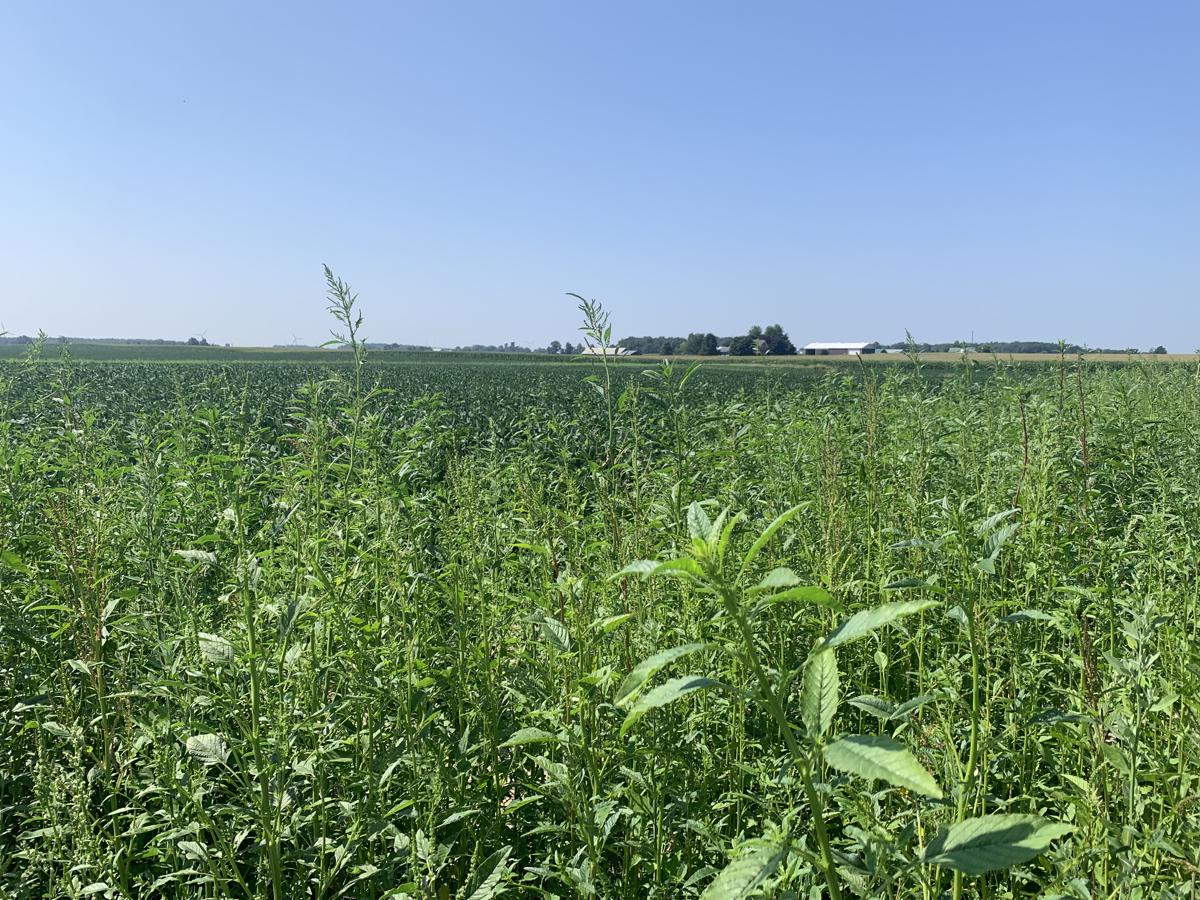


Table of Contents
2025 Season
Herbicide‑resistant weeds continue to increase across Ontario—both in the number of resistant species and in the number of herbicide groups they can survive. This isn’t surprising. Relying on the same herbicide modes of action year after year increases the chance that resistance will develop. New resistant weeds arriving from other regions, such as Palmer amaranth, add to the challenge.
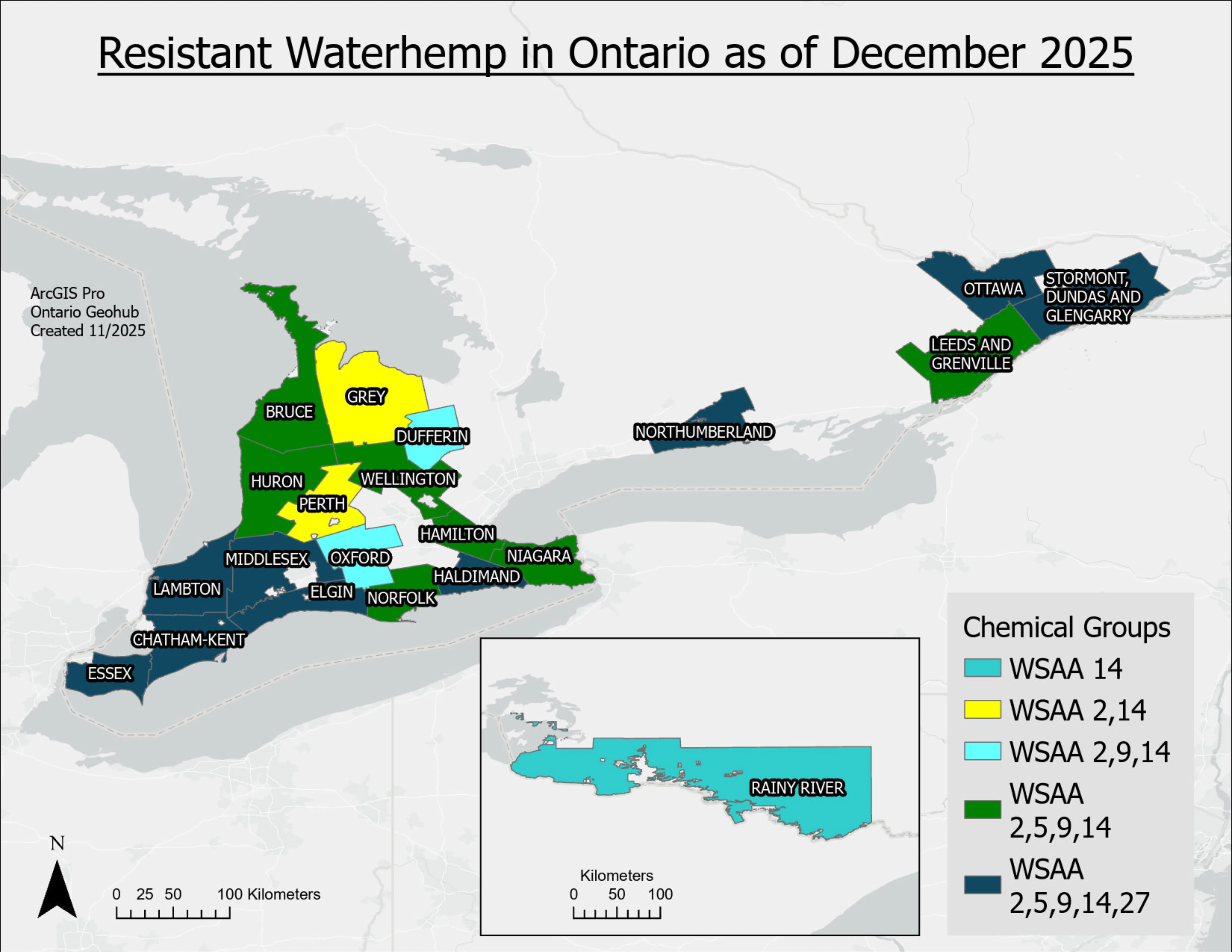
Multiple‑herbicide resistance is becoming more common, which limits the number of effective products available to farmers. Waterhemp is the best example: in Ontario, populations have developed resistance to five herbicide groups (2, 5, 9, 14 and 27) and are now confirmed in 19 counties from southern to northern regions. Multiple resistance is also widespread in other important species for Ontario farmers, including common ragweed, green and redroot pigweed that have resistance to group 2, 5 and 14 herbicides.
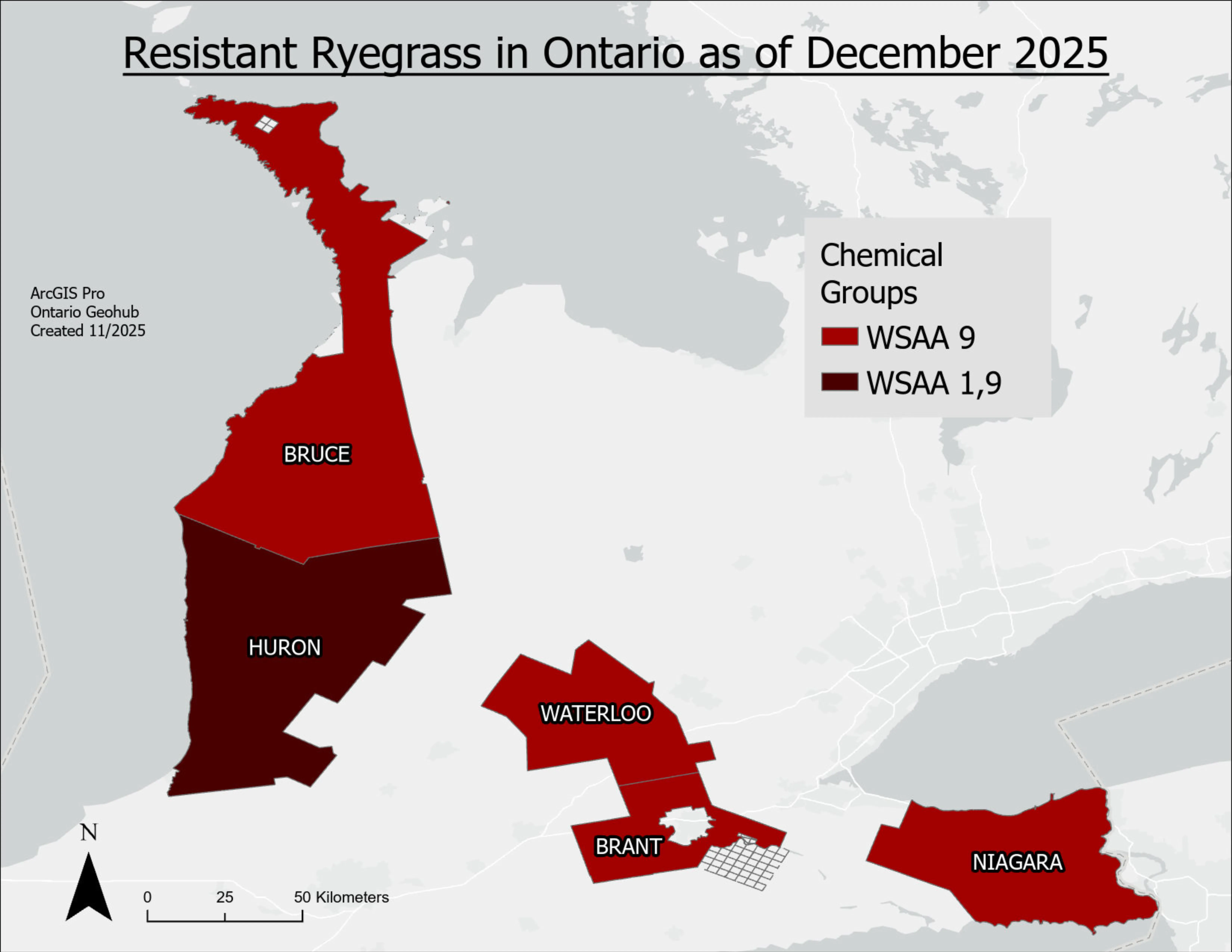
Italian ryegrass—which is sometimes grown as a forage and cover crop — is being found in more counties and testing positive for glyphosate‑resistance (Group 9), making it much harder to control. Refer to Table 1 for an overview of 2025 testing.
| Weed Species | Number of Positive Tests | Resistant to |
|---|---|---|
| waterhemp | 47 | groups 2,9 and 14 |
| Canada fleabane | 5 | group 9 |
| giant foxtail | 1 | group 2 |
| lamb's-quarters | 7 | group 5 |
| pigweed, green | 5 | groups 2 and 14 |
| pigweed, redroot | 14 | groups 2, 5 and 14 |
| common ragweed | 14 | groups 2, 5 and 14 |
| giant ragweed | 3 | groups 2, 5 and 14 |
| ryegrass | 2 | group 9 |
More Palmer amaranth was found in 2025
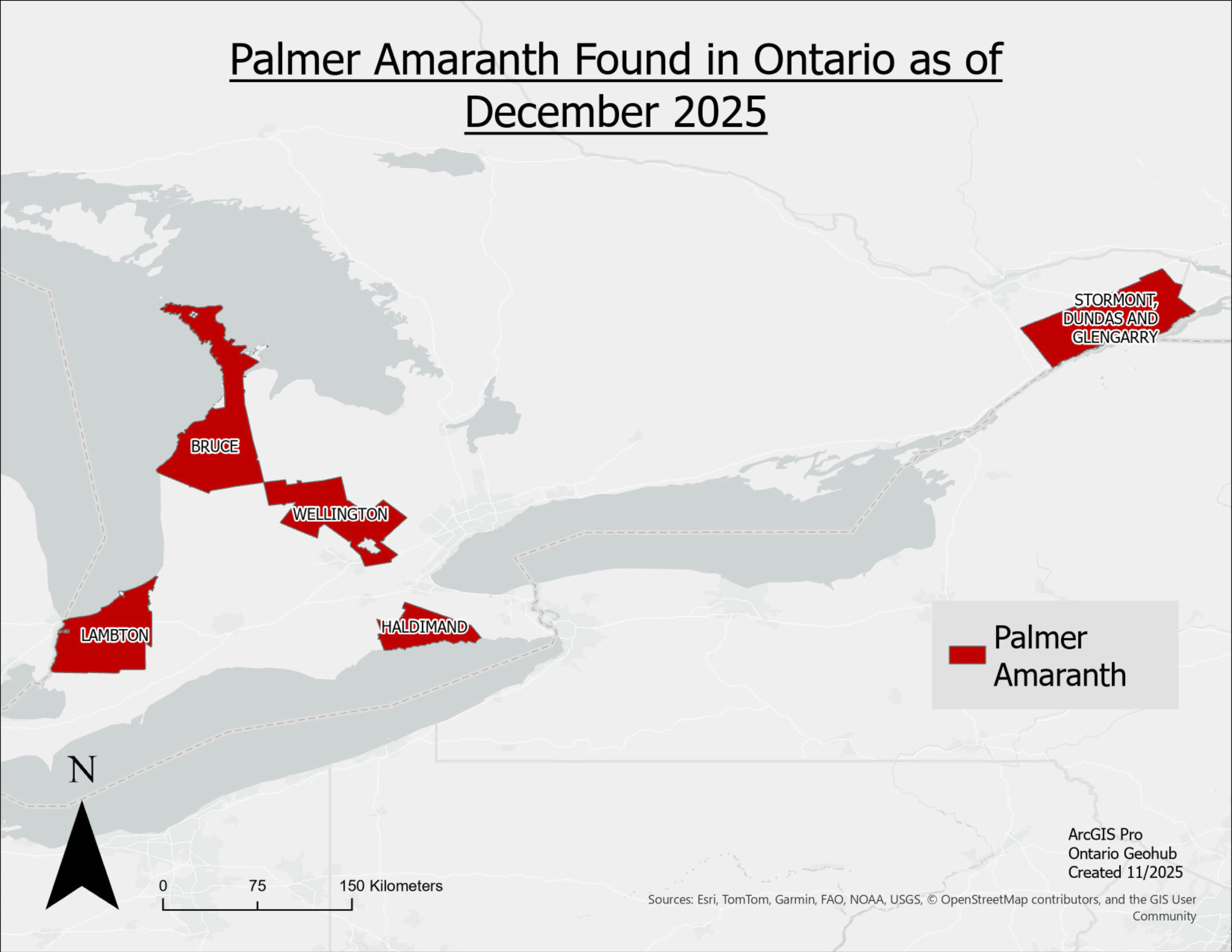
Palmer amaranth isn’t widespread in Ontario yet, but it is a major problem in U.S. field and vegetable crops, where it causes severe yield losses. Recent testing in 2025 confirmed Palmer amaranth in Lambton and Stormont, Dundas and Glengarry counties. This species is extremely competitive and has globally developed resistance to nine herbicide groups, with some populations resistant to as many as six modes of action at once.
Interactive database
For targeted search of herbicide resistant weed data, go to the herbicide resistant weed dashboard.
Distribution Maps
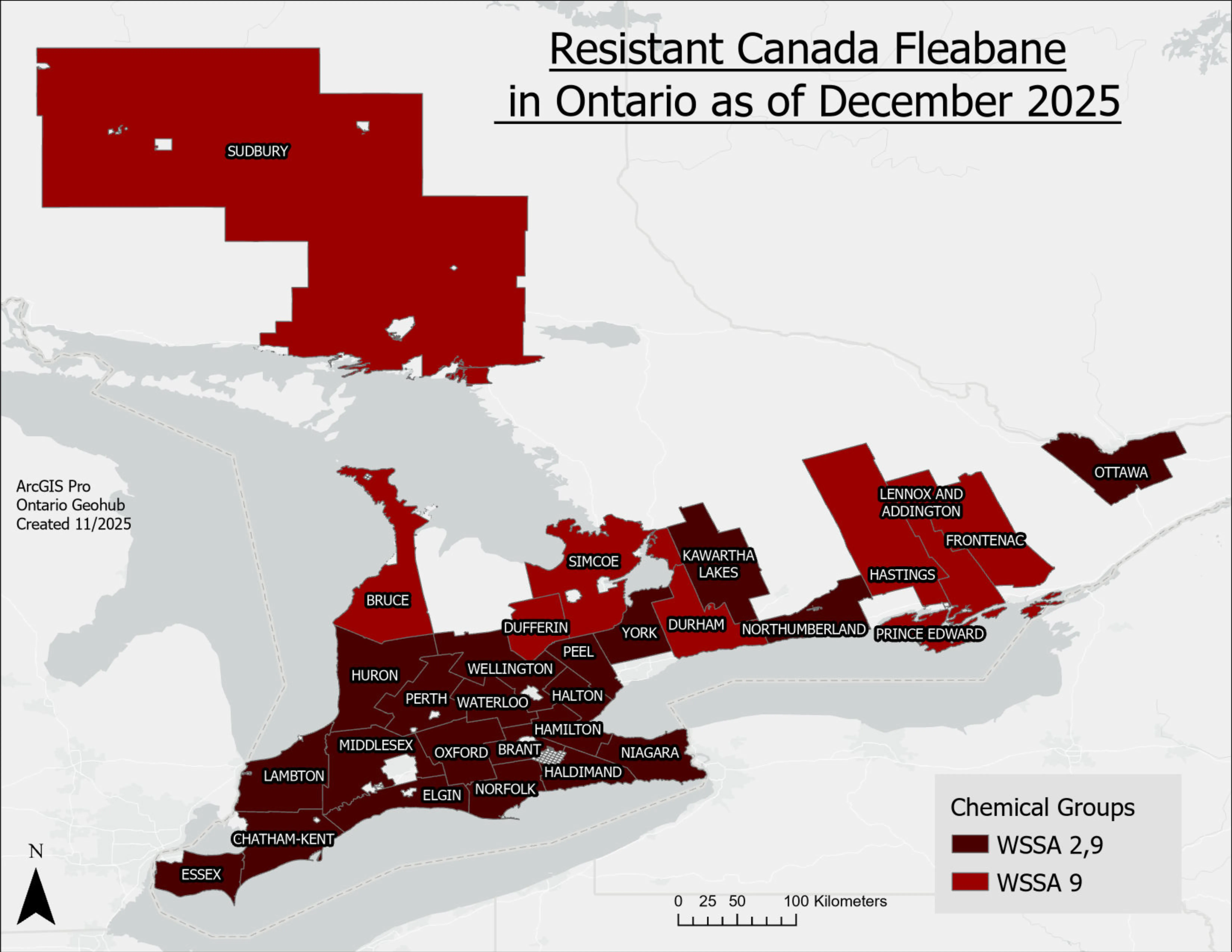
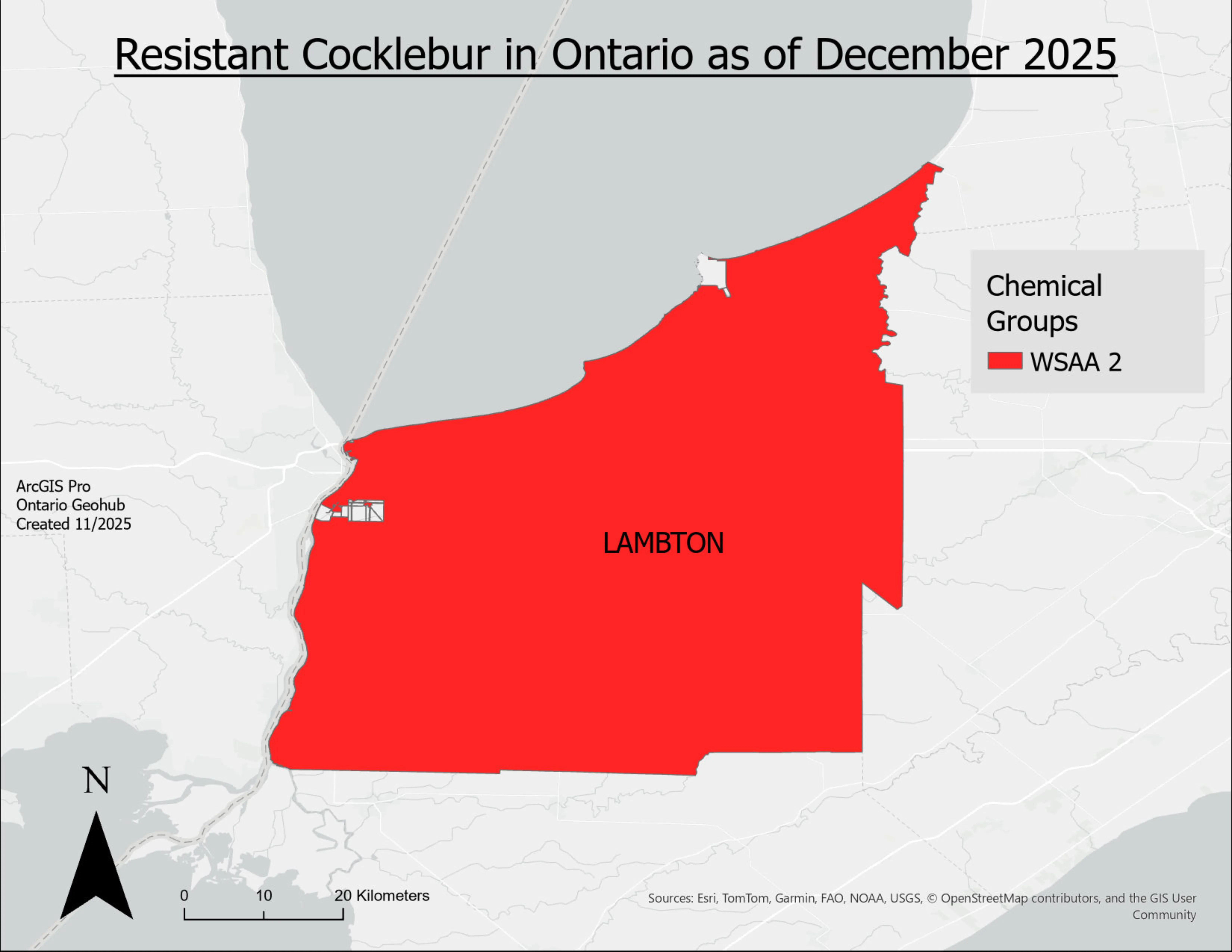
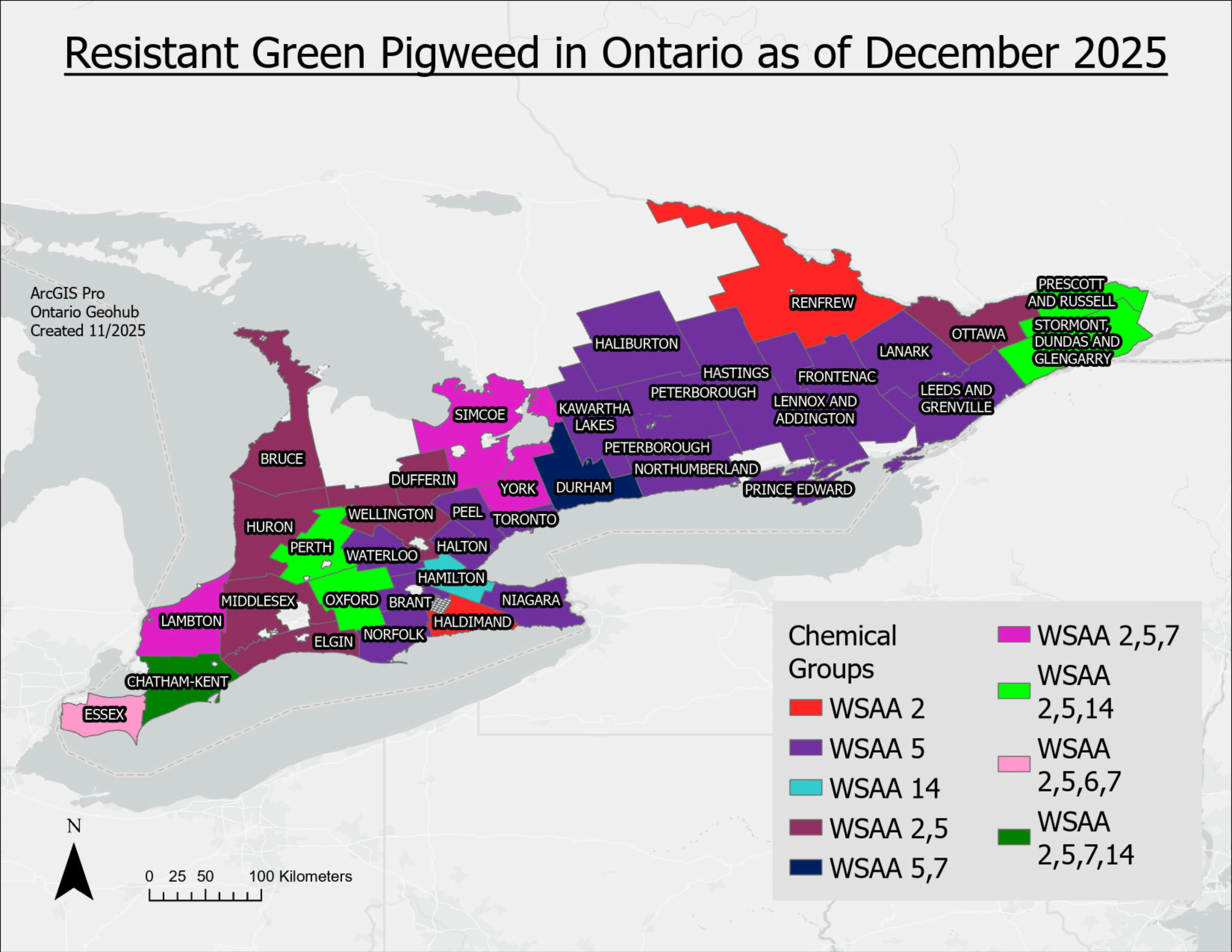
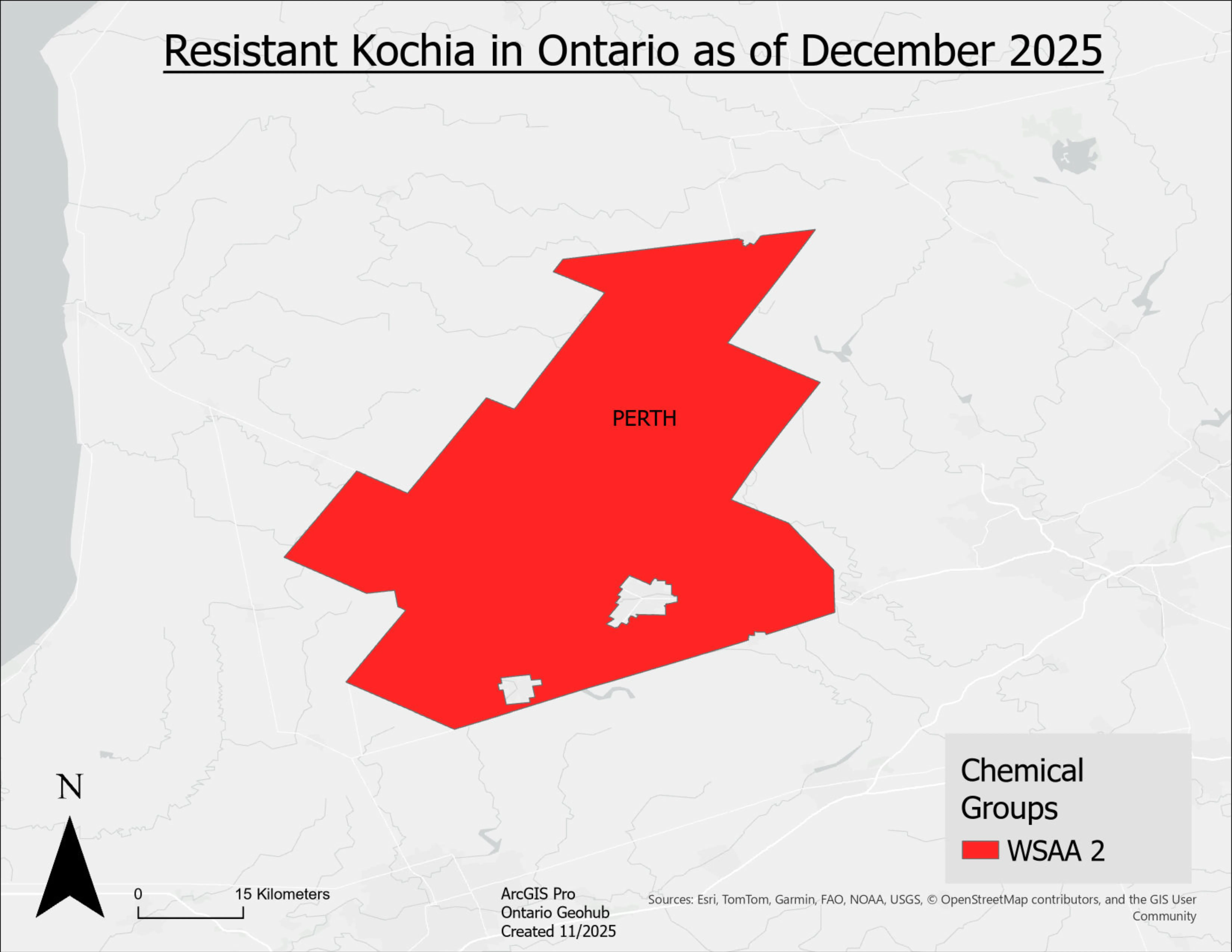
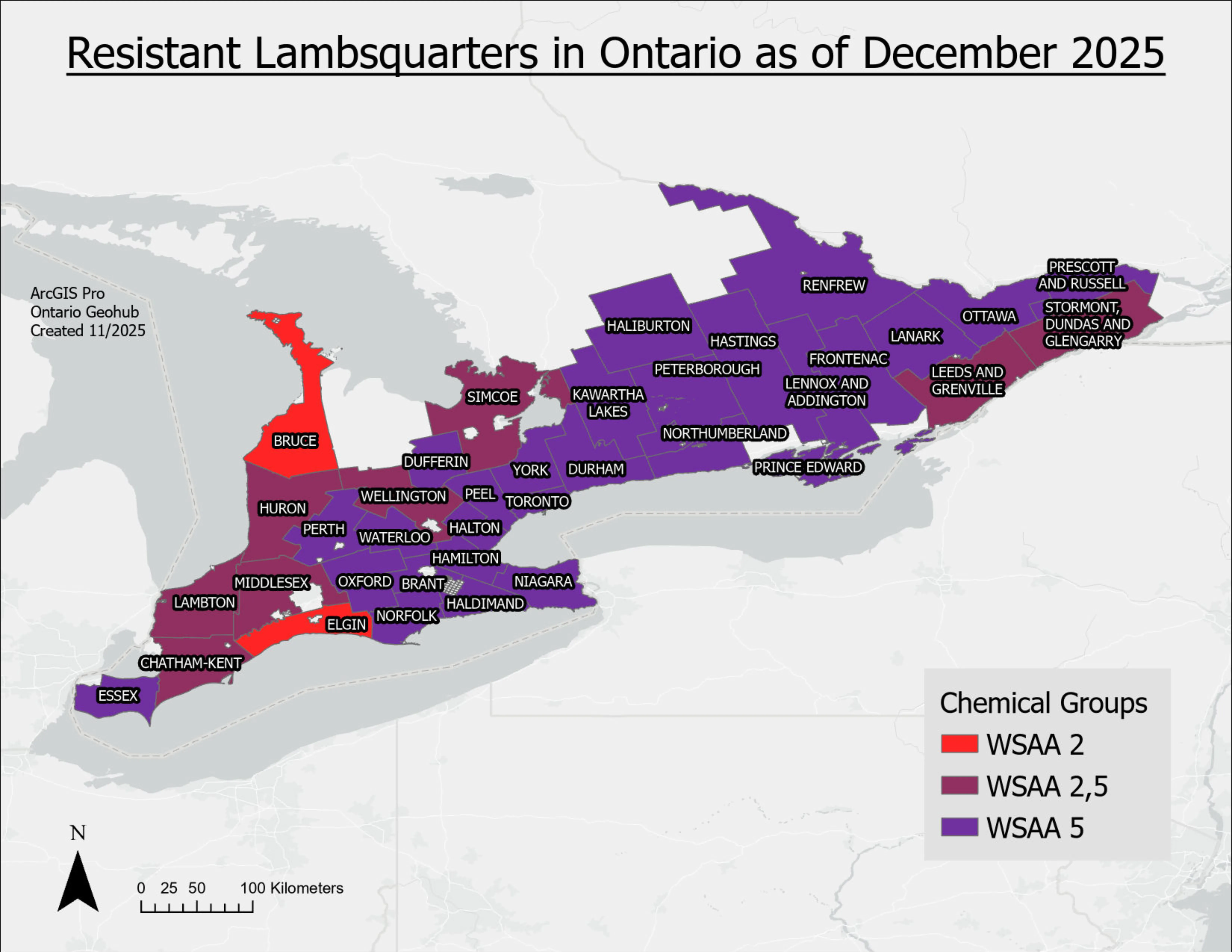
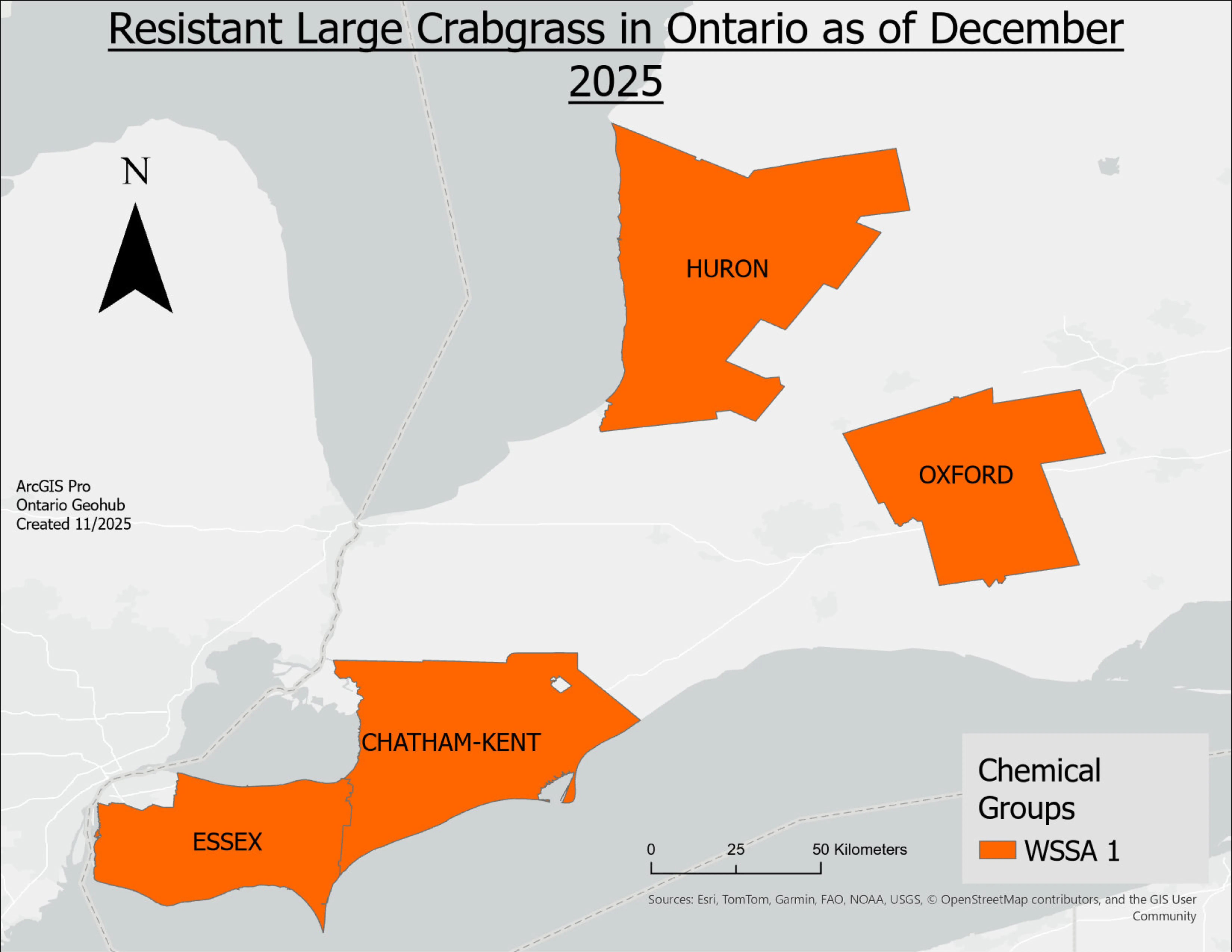
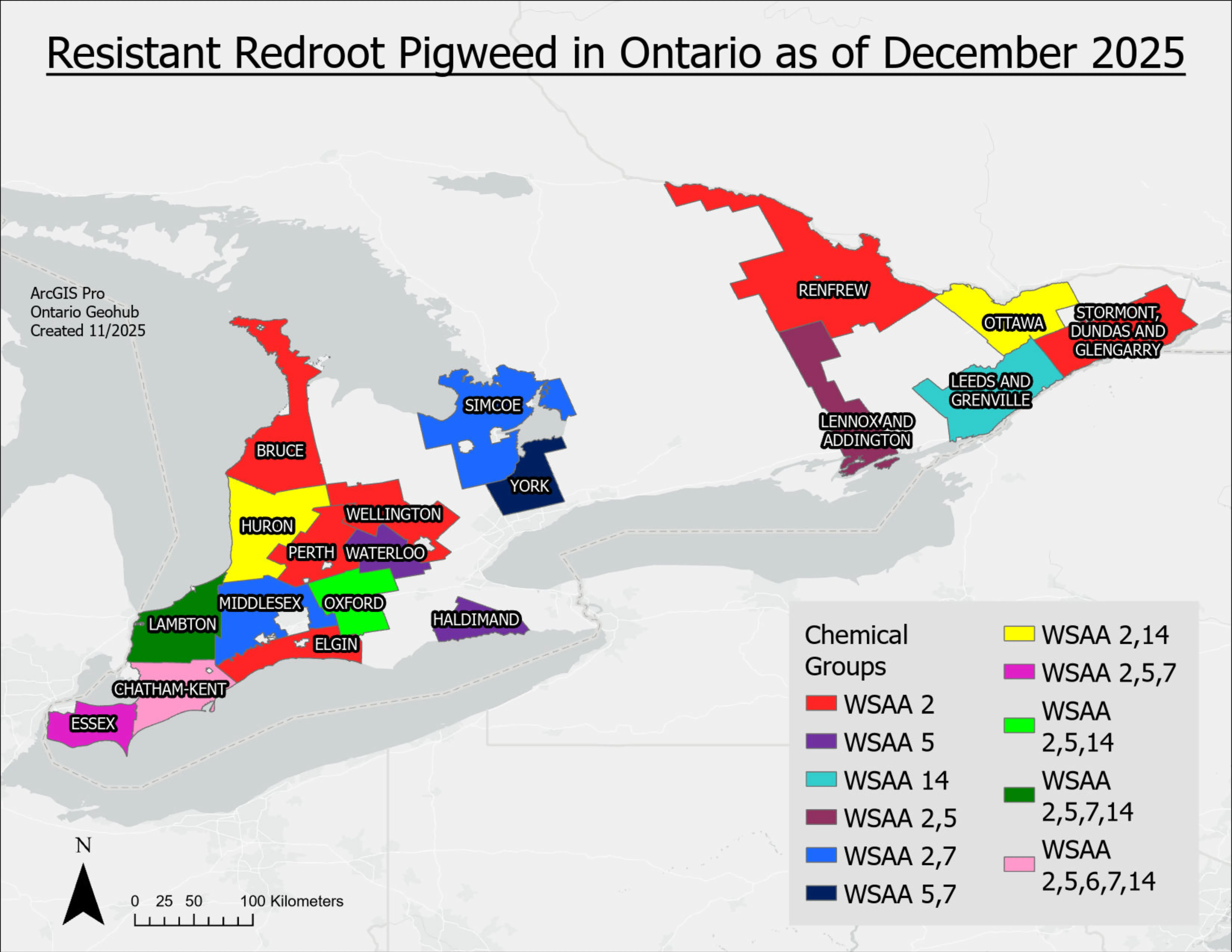
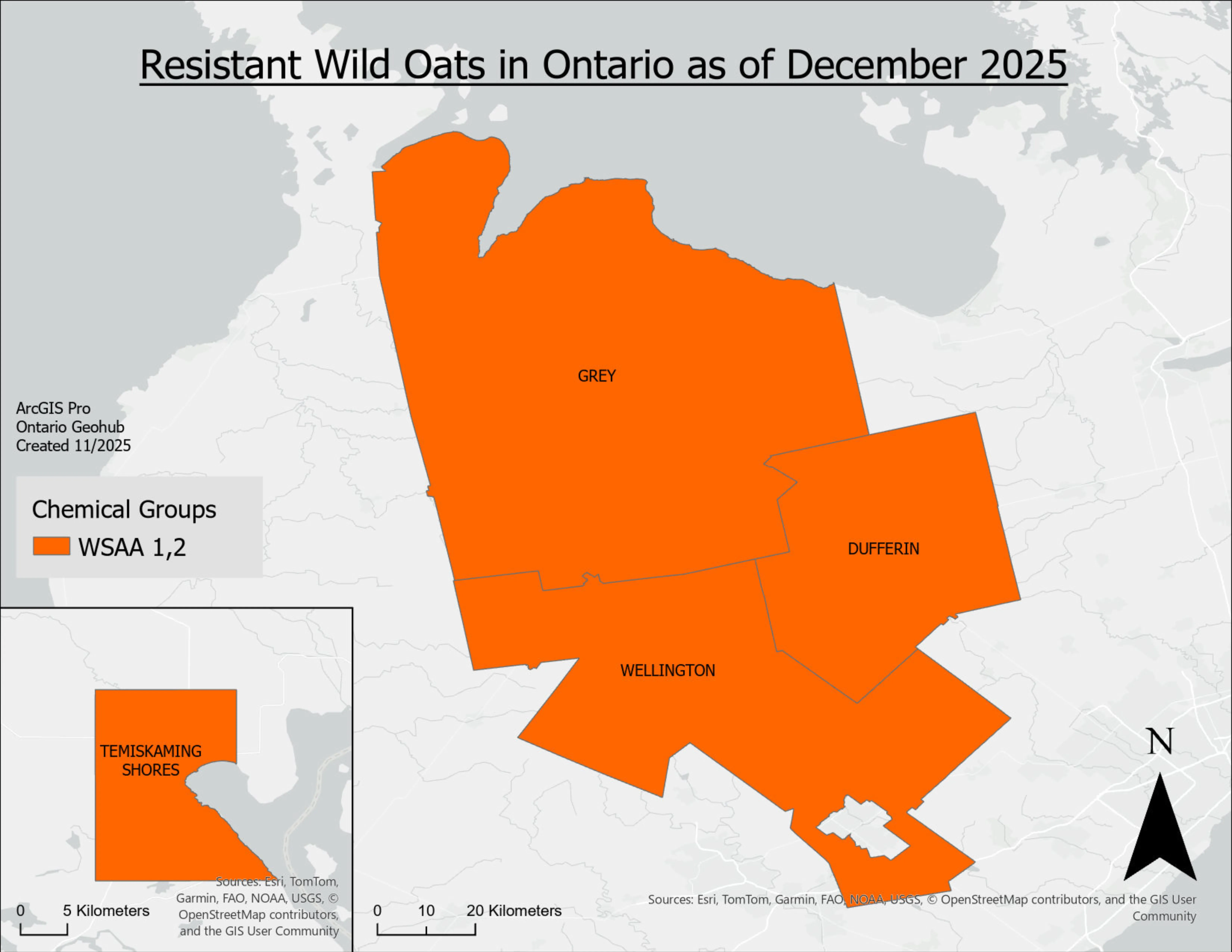
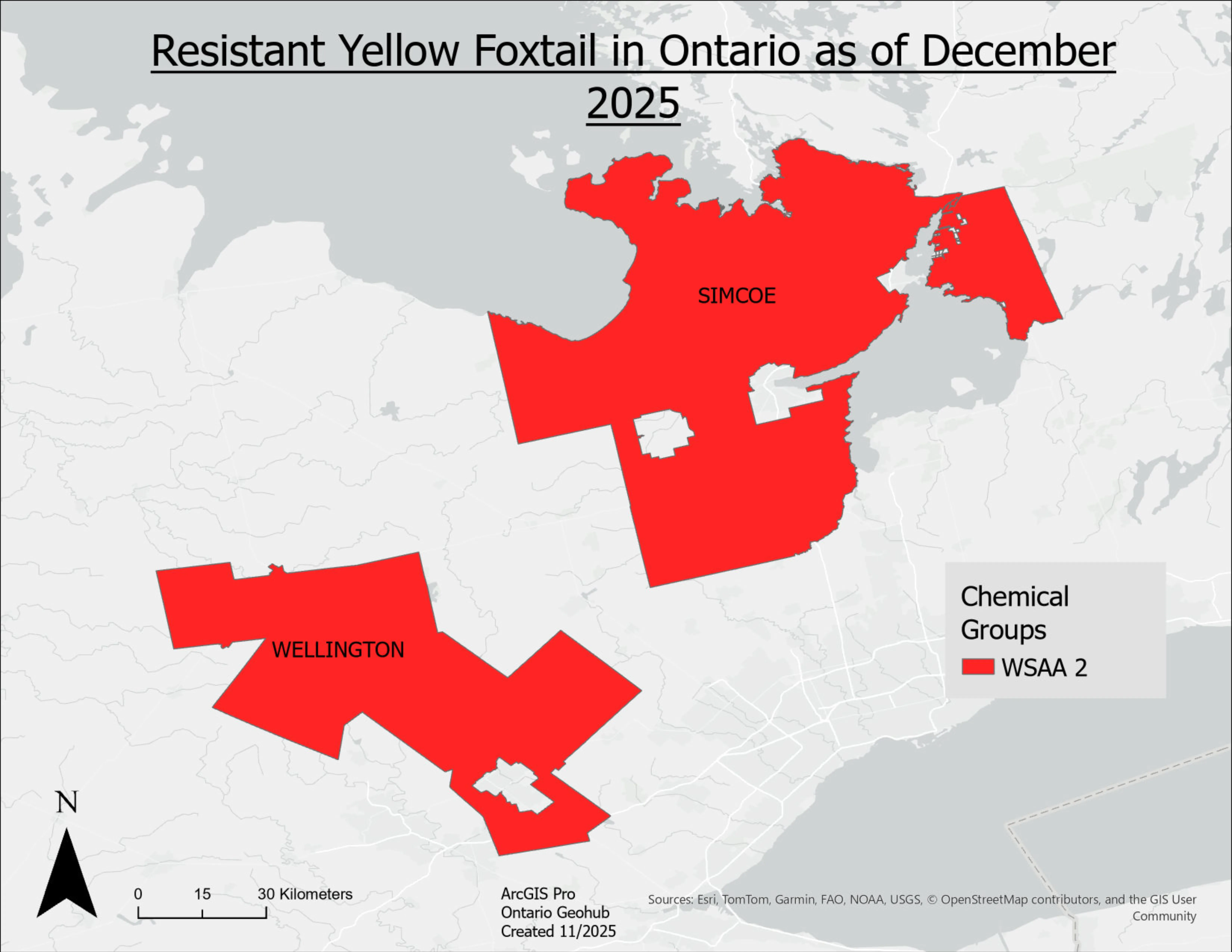
Below are distribution maps of weeds species in Ontario by the WSSA herbicide group(s) that they are resistant to.
Canada fleabane (Conyza canadensis (L.) Cronq.)
Cocklebur (Xanthium strumarium L.)
Common ragweed (Ambrosia artemisiifolia L)
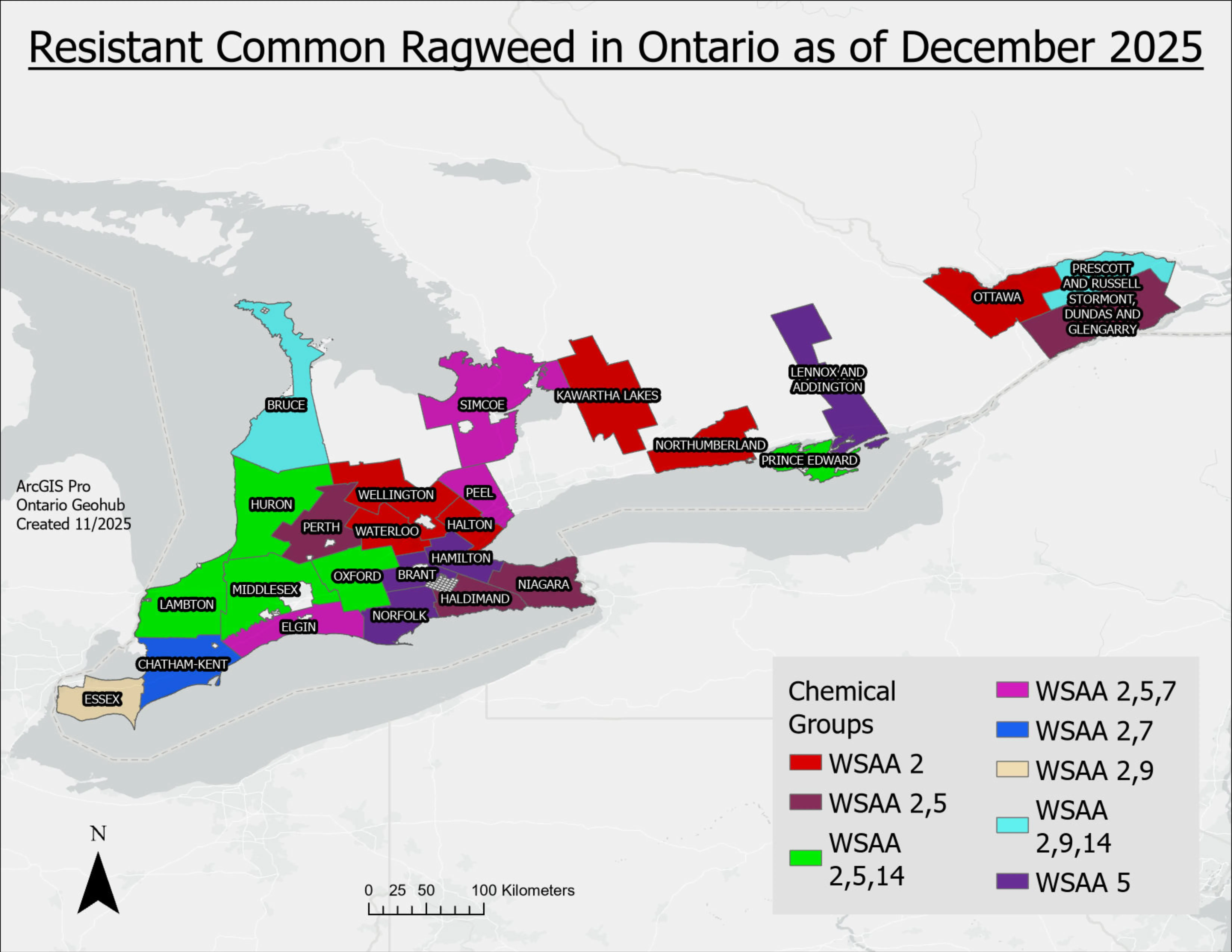
Eastern black nightshade (Solanum ptychanthum Dunal)
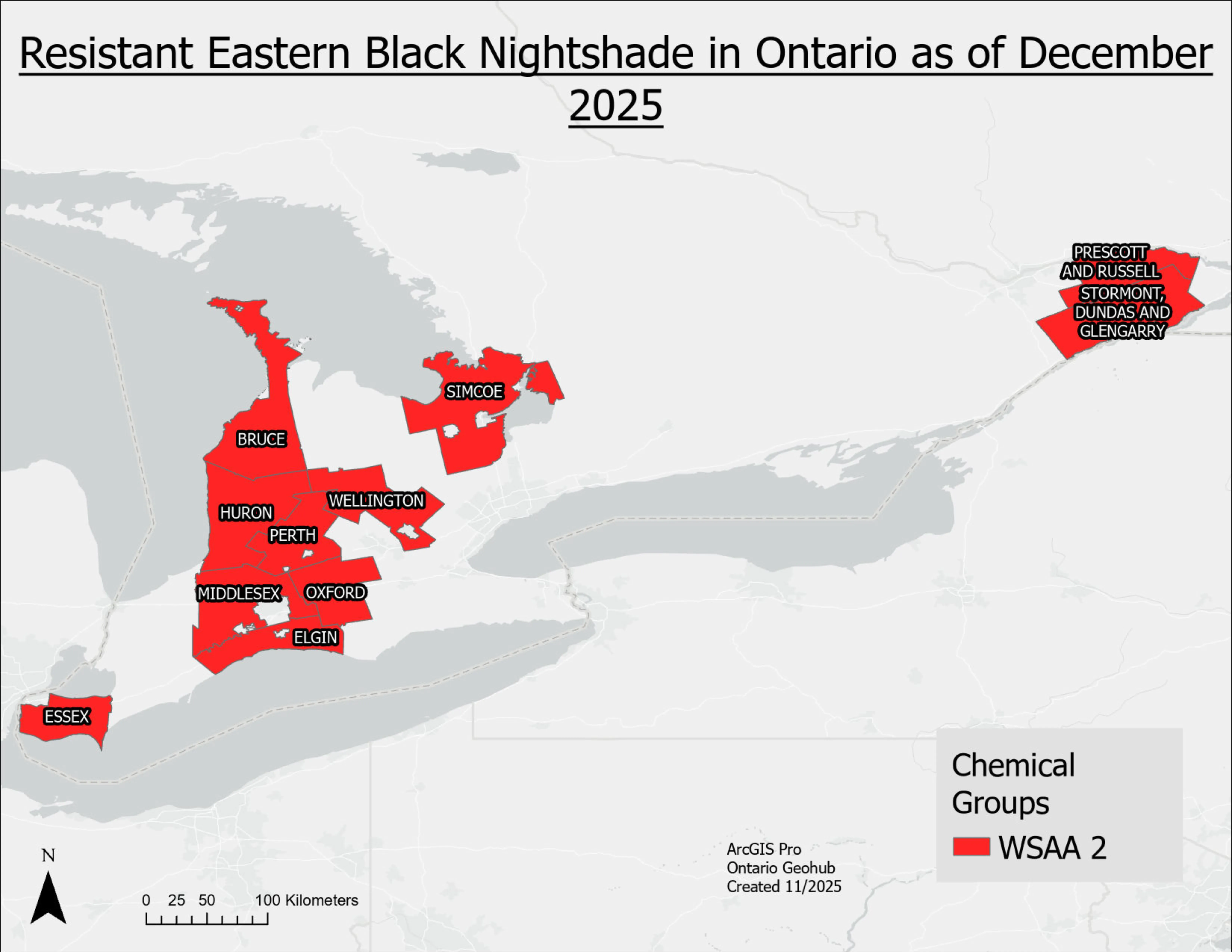
Giant foxtail (Setaria faberi R.A.W. Herrm.)
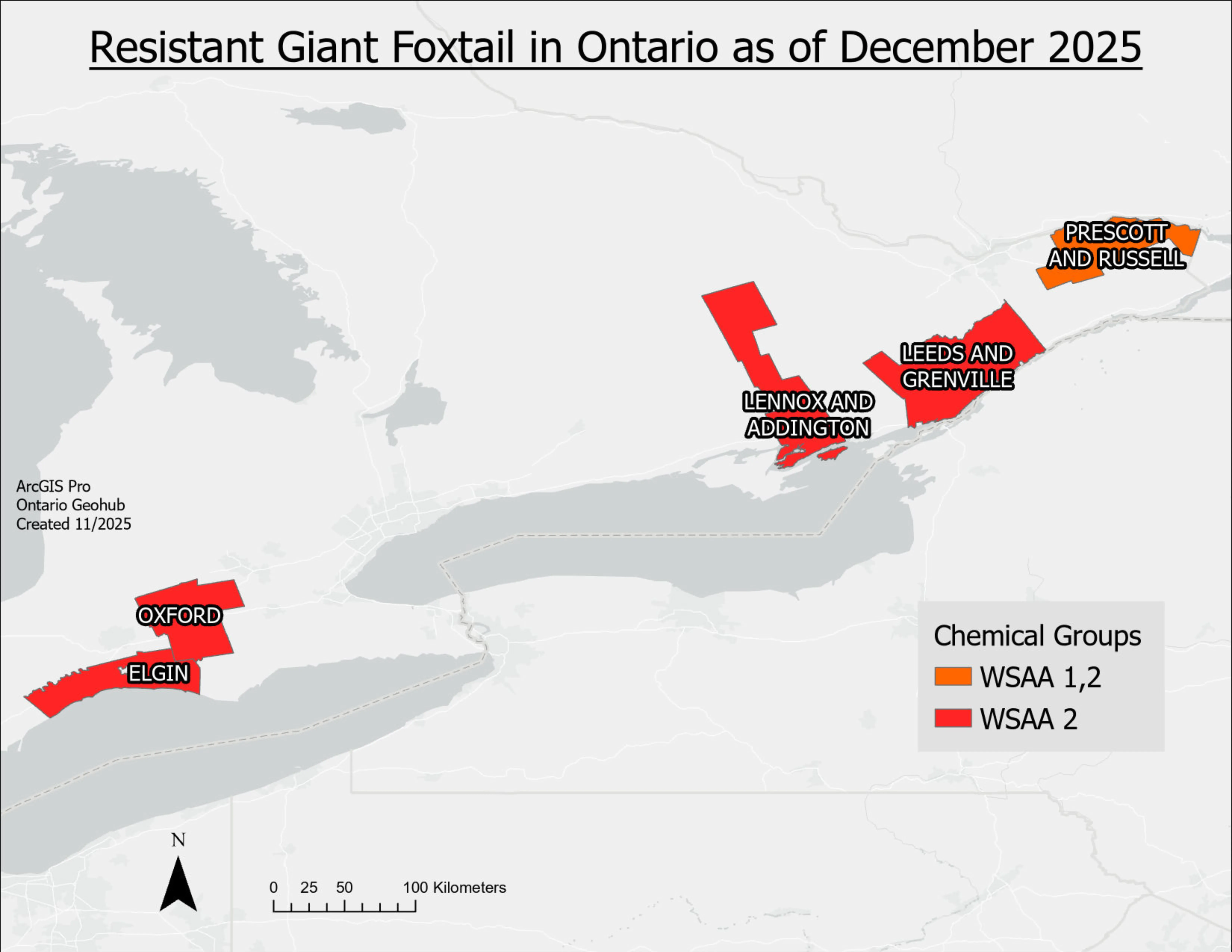
Giant ragweed (Ambrosia trifida L.)
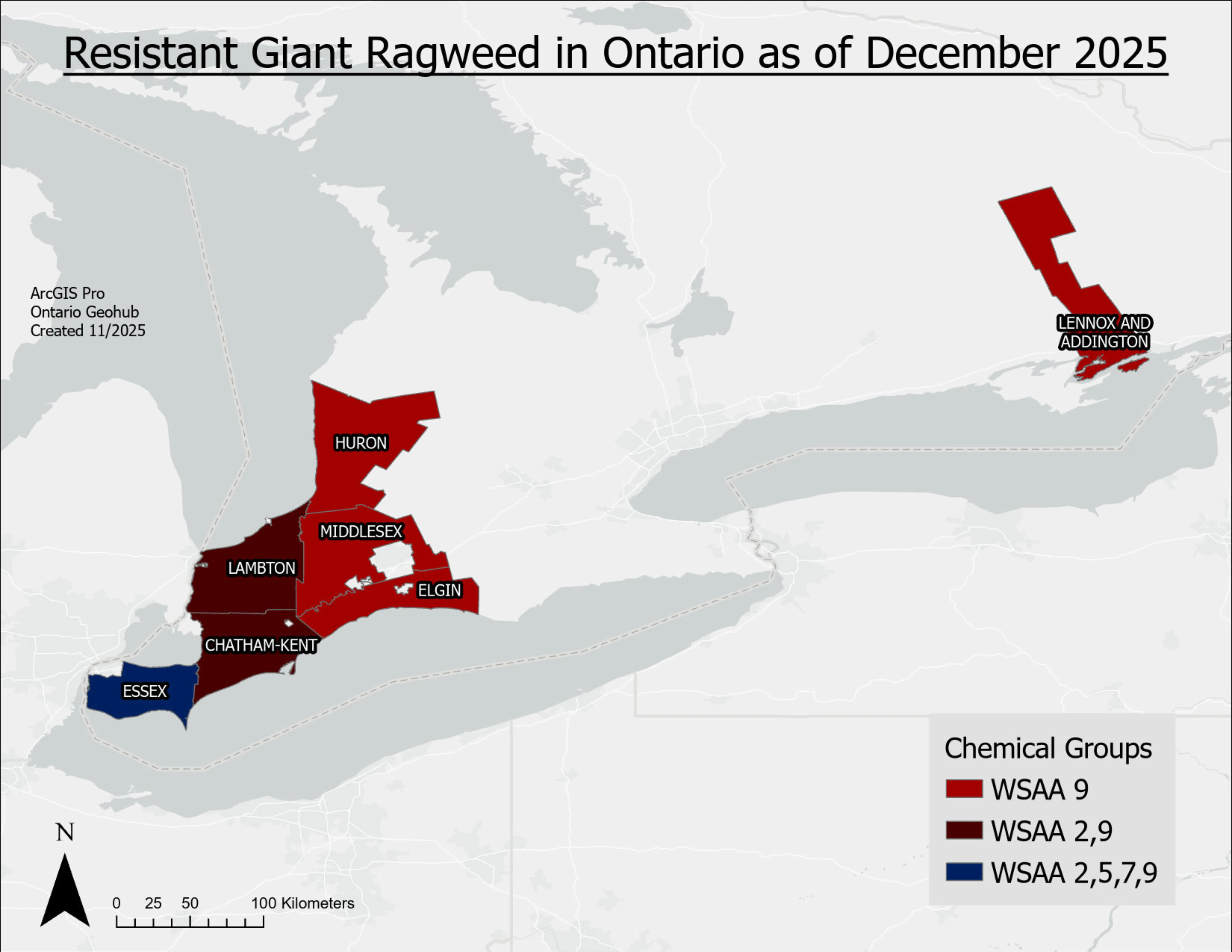
Green foxtail (Setaria viridis (L.) P. Beauv.)
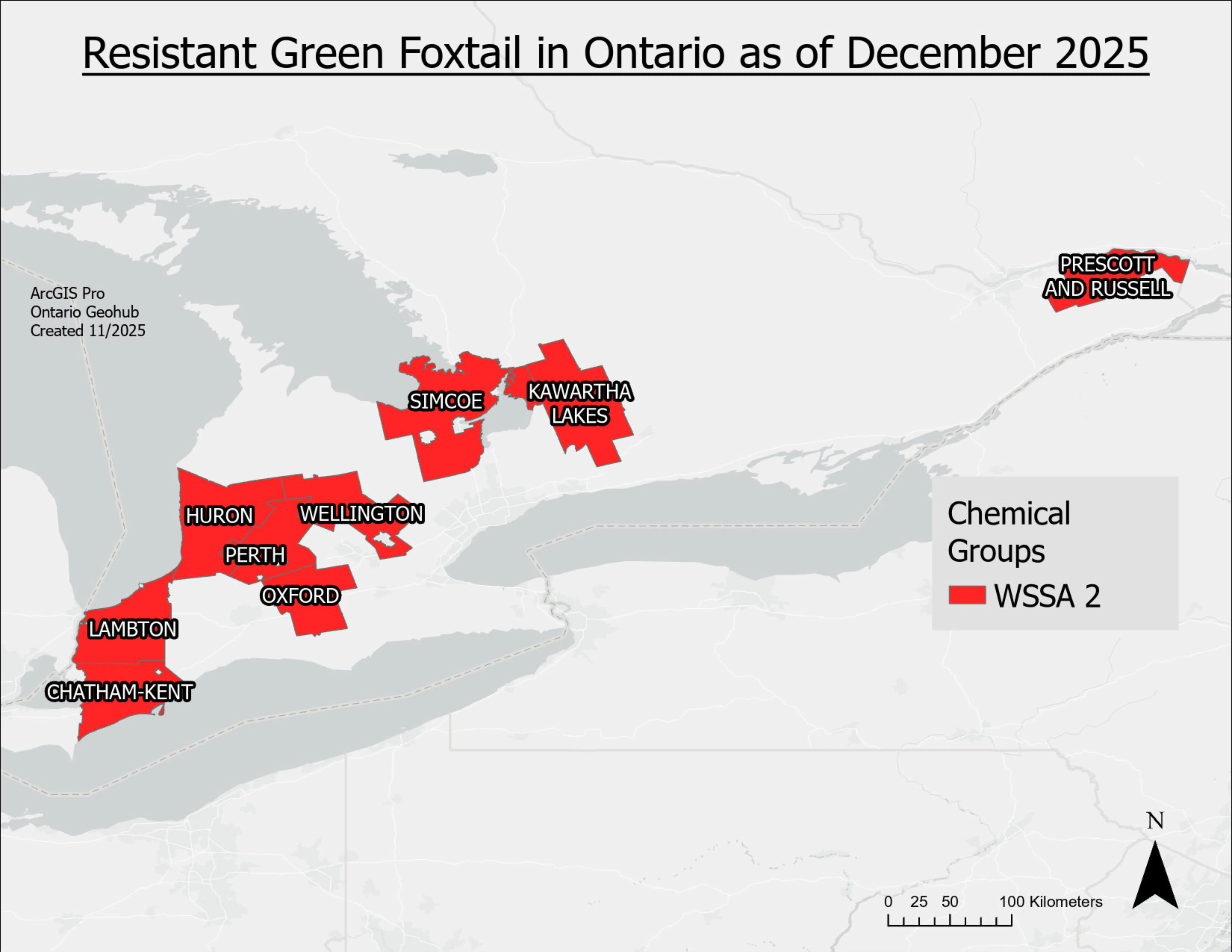
Green pigweed (Amaranthus powellii S. Wats)
Kochia (Kochia scoparia (L.) Schrad.)
Lambsquarters (Chenopodium album L.)
Large crabgrass (Digitaria sanguinalis (L.) Scop.)
Redroot pigweed (Digitaria sanguinalis (L.) Scop.)
Ryegrass (Lolium perenne subsp. multiflorum)
Waterhemp (Amaranthus tuberculatus (Moq.) Sauer var. rudis (Sauer) Costea & Tardif)
Wild oats (Avena fatua L.)
Yellow foxtail (Setaria pumila (Poir.) Roem. & Schult.)
Acknowledgements
We would like to acknowledge the support of the following for providing this testing services to Ontario farmers:
- BASF
- Bayer CropScience
- Grain Farmers of Ontario
- Ontario Bean Growers
- Ontario Processing Vegetable Growers
- Syngenta Canada
- Tardif lab - University of Guelph